AE-390
CONCRETE FRAME
GROUP 9
Arguments against concrete framing

Time - Each member of a concrete frame needs to be poured at some point, unlike its steel counterpart. This requires much more onsite installation time as the forms need to be constructed, rebar needs to be laid out, the concrete needs to be poured, and the mix needs time to cure before any force can be applied.
Tension - Concrete members perform poorly when in tension. Concrete's tensile strength is about a tenth of its compressive strength. Steel beams have the ability to deflect slightly prior to failure, whereas concrete beams will begin to pull apart on the underside of the beam, resulting in failure. Thus why concrete is typically found in arches and foundations.
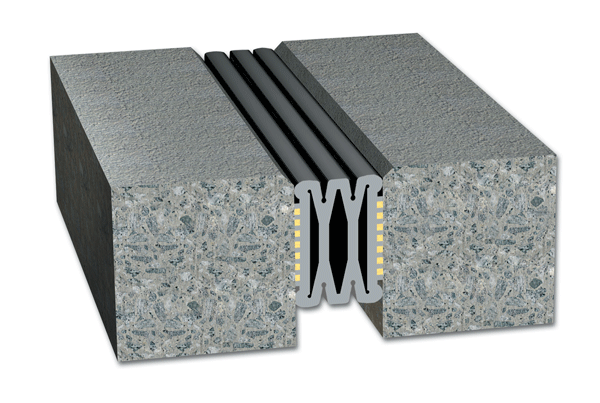
Expansion - Much of the design difficulty that comes with concrete framing is working around the thermal expansion that each member will undergo. Expansion joints need to be strategically placed throughout the structure to allow for expansion and contraction throughout the year. This simply leaves space between two concrete members with a flexible gasket between them to accomodate any expansion or deflation that will occur.
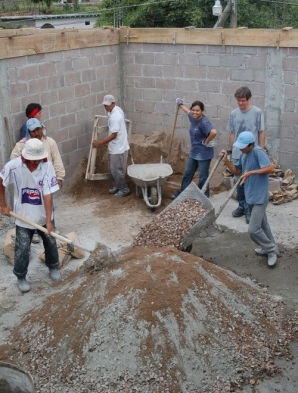
Quality - The quality of the concrete mixture can be highly variable. If the mixing and casting are done onsite then there is a risk for imperfections in the mix. Additionally, the curing process is at the mercy of the weather and onsite conditions.
Cracking - Concrete is very suceptible to cracking due to shrinkage, extreme live loads, and freeze/thaw conditions. This can greatly reduce the lifespan of a concrete frame if this issue is not addressed both during and after the installation of the concrete member.
SPANS - There are some doubts about the length of spans that concrete can handle. The length that a concrete beam will be able to span is dependent on the thickness of the beam. Although the understanding of concrete has introduced rebar and admixtures to concrete design, it still does not have the tensile strength of a steel member.